
Money BetterThisWorld is the clear, workable idea that every dollar you handle can either keep you stuck in stress and short-term thinking or steadily expand your options while making the world around you a bit stronger and fairer. It is not a flashy system or a set of rigid rules. It is a calm way of treating money as a tool for security, choice, and contribution at the same time.
People who practice it usually notice two changes first: financial anxiety eases and their decisions start matching the kind of life and world they actually want. This complete guide shows exactly how that works in ordinary daily life, step by step, without hype.
What Money BetterThisWorld Actually Means Day to Day
Money BetterThisWorld starts with one simple recognition. Once money leaves your hands it is never neutral. It either supports systems you believe in or feeds ones you would rather avoid. Most people never pause to notice this because daily financial life feels too full already. The BetterThisWorld approach interrupts that autopilot by asking a single clear question before important decisions: does this move me closer to personal stability and a healthier wider world, or further away. The answer does not need to be perfect. It just needs to lean the right way more often than not. This mindset refuses the old split between looking after yourself and looking after others. You can build a solid emergency fund and still choose a bank that lends in underserved neighborhoods. You can enjoy a comfortable life and still send a steady portion of surplus toward causes that reduce harm. The framework works for someone carrying credit-card debt and for someone with a growing investment portfolio. What stays constant is the intentional direction of resources. Over time the practice compounds quietly. Small aligned choices free up attention and reduce the low-grade guilt many people carry about spending and investing. That freed attention then makes better decisions easier. The result is a financial life that feels less like constant negotiation with yourself and more like steady progress in the direction you care about most.
Why Ordinary Money Advice Often Leaves People Feeling Incomplete
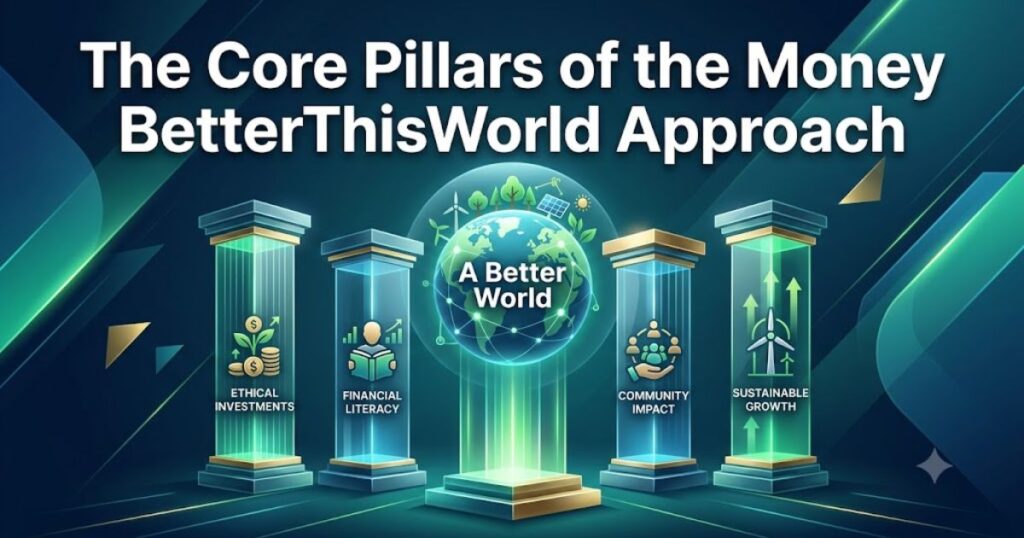
Standard personal-finance guidance treats the individual as an isolated unit. Track expenses, cut the coffee, invest in index funds, pay debt in a certain order. Those tools are useful, yet they rarely speak to the larger systems those dollars move through or the deeper sense of purpose many people want from their resources. A person can follow every classic rule and still wake up feeling that something essential is missing. Money BetterThisWorld fills that gap by weaving purpose into the everyday mechanics. It does not discard the useful tools. It simply adds a consistent filter that weighs social and environmental effects alongside personal ones. Traditional advice also tends to treat more as automatically better: higher income, bigger house, larger portfolio. The BetterThisWorld lens questions that assumption once basic security and modest comfort are in place. Research on well-being shows diminishing returns from extra material gains after a certain point. This approach takes that evidence seriously and builds systems that protect the freedom to stop chasing once enough has been reached. Another quiet limit of ordinary advice is its silence on externalities. A portfolio can grow while the companies inside it damage ecosystems or labor conditions. Conventional metrics ignore those costs. Money BetterThisWorld brings them into the conversation without demanding purity. It encourages gradual improvement and honest trade-offs so financial success does not later feel hollow.
How to Build Money Goals That Actually Last
Clarity begins with a short written money mission. This is not a collage of luxury images. It is a few sentences that capture what money is supposed to do in your life. Provide stability for the household. Create time for creative work. Support education access. Reduce the household’s environmental footprint. The exact wording matters less than the act of writing it down and revisiting it regularly. When new expenses or opportunities appear, the mission becomes a quick reliable filter. Next comes honest mapping of current cash flow. Track income and spending for sixty to ninety days without judgment. Most people discover that some “needs” are actually habits and some “wants” genuinely support well-being. Use that data to redesign rather than simply restrict. The goal is alignment, not austerity. Goals then layer naturally. Short-term targets focus on stability: three to six months of essential expenses in liquid form, elimination of high-interest debt, basic insurance. Medium-term targets address freedom: career-transition funds, skill investments, housing that supports rather than strains the household. Long-term targets combine personal security with broader impact: retirement accounts that include sustainable options and ongoing allocations to causes or enterprises that match the mission. Each layer strengthens the others. Stability makes freedom possible. Freedom creates capacity for contribution.
Budgeting That Protects You While Creating Space for Impact
Budgeting under this approach is treated as a living plan, not a cage. A practical starting structure modifies the familiar 50/30/20 guideline. Roughly half covers true needs: housing, food, utilities, transport, basic healthcare. About thirty percent supports living well: relationships, experiences, modest comforts, hobbies. The remaining twenty percent splits between future security and intentional impact. Some people begin with fifteen percent to savings and investing and five percent to giving or impact vehicles. Others reverse the proportions once the emergency fund is solid. Percentages stay flexible. What matters is that both personal resilience and outward contribution receive deliberate space. Tracking can be a simple shared spreadsheet or an app that categorizes transactions. Consistency beats perfection. A ten-minute weekly check-in keeps the system honest without turning money management into a second job. When spending drifts, the response is curiosity rather than criticism. What need was the overspending trying to meet? Is there a lower-cost or higher-impact way to meet it next time? That gentle question usually produces better long-term habits than rigid rules. Some households use value-based allocations. Money for local food systems, carbon-conscious travel, or community mutual aid is set aside in advance. When the allocation is spent, the category closes until the next cycle. This structure prevents good intentions from collapsing under impulse. It also makes impact visible, which creates positive reinforcement that pure willpower rarely matches.
Conscious Spending as a Daily Habit That Feels Natural

Conscious spending starts with the recognition that every purchase is a vote. The companies and systems receiving those votes expand. Money BetterThisWorld encourages casting more votes for businesses that treat workers fairly, minimize environmental harm, and strengthen local economies when possible. This does not require researching every single item. It begins with the largest and most frequent purchases: food, clothing, transportation, and household energy. Food offers an accessible entry point. Shifting even part of the grocery budget toward local producers, regenerative farms, or fair-trade options redirects capital toward more resilient systems. Price differences are often smaller than expected once seasonal and bulk choices are considered. Clothing follows similar logic. Prioritizing durable, ethically made garments reduces both environmental cost and long-term wardrobe expense. Transportation decisions compound quickly. Walking, cycling, public transit, or shared options for routine trips lower both costs and emissions. Digital consumption belongs in the same conversation. Subscription services and online marketplaces shape attention and resource flows. Periodic audits of recurring charges often free surprising amounts that can move toward higher priorities. Conscious spending is not about deprivation. It is about ensuring the pleasure of a purchase is not undercut by later regret over its hidden costs.
Ethical and Impact Investing Without Feeling Overwhelmed
Investing under the Money BetterThisWorld umbrella begins with the same clarity used in budgeting. The first question is not which fund posted the highest recent return. It is which combination of return, risk, and impact best supports the money mission. Broad low-cost index funds remain useful core holdings because of diversification and efficiency. Around that core, investors can add funds or holdings that emphasize environmental, social, and governance factors, community development, or specific solutions such as renewable energy and affordable housing. Many people start small. Automatic monthly contributions of even modest amounts build the habit and reduce the emotional weight of market timing. As confidence and capital grow, the allocation to impact-oriented options can expand. Shareholder engagement is another accessible tool. Proxy voting and direct communication with company management allow ordinary investors to push for better labor practices, emissions reductions, and transparency. These actions require little time yet contribute to systemic improvement. Real estate and alternative investments also fit when chosen carefully. Community land trusts, cooperative housing, and local business loans can deliver both financial returns and tangible social benefits. Thorough due diligence and realistic expectations about liquidity remain essential. Money BetterThisWorld never claims impact investments will always outperform conventional ones. It simply insists that the full set of outcomes, including non-financial ones, be considered.
Building Real Resilience Through Steady Saving Habits
Saving under this approach is framed as creating optionality rather than stockpiling for its own sake. An emergency fund covering three to six months of essential expenses forms the foundation. Held in a safe, accessible account, it protects against shocks that force high-interest debt or premature sale of long-term investments. Once that buffer exists, additional savings can target specific freedom funds: career transitions, unpaid leave, or moves that improve quality of life. High-yield savings accounts and short-term certificates work well for near-term goals. Longer horizons benefit from a mix of bonds and conservative stock funds. The BetterThisWorld lens adds one more filter: where the institution places the deposited money. Banks and credit unions that prioritize community lending or avoid extractive industries become preferred homes for cash reserves. Yield differences are usually small. Alignment differences can feel significant. Automation removes most friction. Direct deposits that split income into multiple accounts ensure saving happens before discretionary spending claims the money. Periodic reviews keep the system matched to changing circumstances. A new child, job change, or shift in values all warrant adjustments. The goal is a structure that feels supportive rather than punitive.
Earning in Ways That Match Your Values and Protect Your Energy
Income generation under Money BetterThisWorld is evaluated by more than paycheck size. The nature of the work, its effects on others, and its compatibility with personal well-being all matter. Some people find their current role already fits and simply adjust how they use the resulting income. Others discover that a gradual shift toward more values-aligned work improves both financial and psychological outcomes. Side income streams often provide a low-risk testing ground. Freelance skills applied to mission-driven organizations, teaching, or product creation can generate extra cash while building expertise and networks. Referral programs and carefully chosen micro-task platforms can supplement when kept in proportion. The approach cautions against hustles that consume time and attention without meaningful return or that rely on exploiting others. Career decisions benefit from the same three-way filter used for spending. A higher-paying role demanding seventy-hour weeks and supporting extractive industries may look attractive on paper yet erode health and values over time. A slightly lower-paying role with better boundaries and positive externalities can produce higher overall well-being while still supporting financial goals. The calculation is personal. The framework simply insists the calculation include more than pretax income.
Giving and Philanthropy That Multiplies Real Results
Charitable giving under Money BetterThisWorld is treated as an investment in outcomes rather than a feel-good transaction. Donors begin by clarifying the change they want to support. Improved educational access, reduced plastic pollution, stronger local food systems, or any other specific goal. They then seek organizations with transparent track records, clear theories of change, and measurable results. Small regular gifts often produce more sustained impact than occasional large ones because they allow organizations to plan. Donor-advised funds and giving circles can amplify individual contributions by pooling resources and sharing due diligence. Workplace matching programs and tax-advantaged vehicles stretch the same dollars further. The approach also encourages non-financial contributions of time and skills when those are the scarcer resources. A professional who donates expertise may create more value than an equivalent cash gift. Impact measurement closes the loop. Periodic review of how funds were used and what results followed allows donors to refine strategy. Causes delivering strong outcomes receive continued or increased support. Less effective ones are paused. This disciplined process turns giving into a learning practice rather than a static habit.
Handling Debt With Intention Instead of Shame
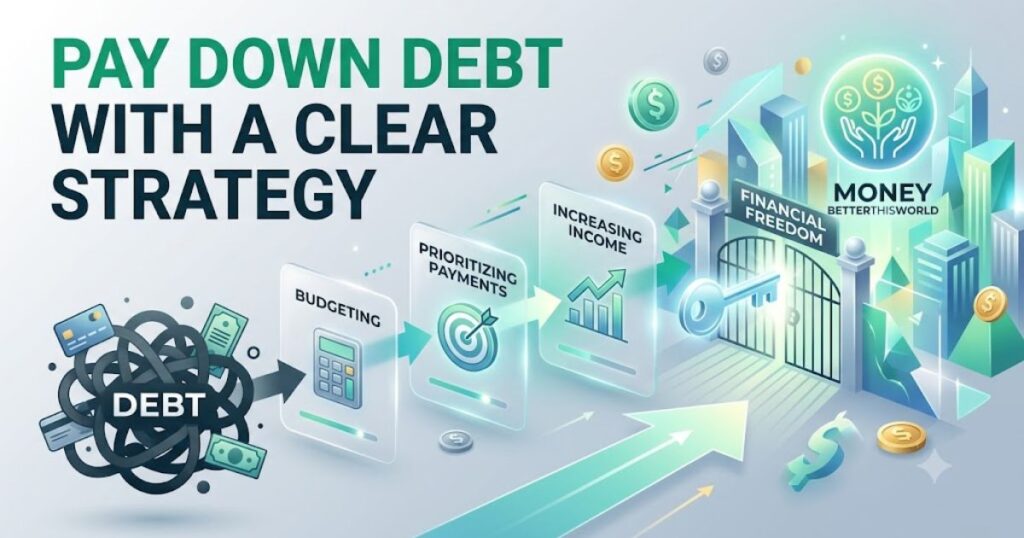
Debt is neither inherently good nor inherently bad under the Money BetterThisWorld lens. It is a tool whose value depends on purpose, cost, and repayment plan. High-interest consumer debt is almost always destructive because it transfers wealth outward at a steep rate and reduces capacity for other goals. Student loans, mortgages, and business debt can be constructive when they fund productive assets or human capital at reasonable rates. The practical response to high-cost debt is prioritization. The avalanche method (highest interest first) or snowball method (smallest balance first) both work. The choice depends on whether mathematical efficiency or psychological momentum matters more to the individual. Once high-interest balances clear, the freed cash flow is redirected according to the money mission rather than allowed to disappear into lifestyle inflation. For necessary debt the approach adds an ethical overlay. Mortgages from community-focused lenders, student loans supporting public-service careers, and business credit used to create local employment receive different weight than equivalent debt funding pure consumption. Refinancing opportunities are evaluated not only by rate reduction but also by the practices of the new lender.
Protecting What You Build With Insurance and Basic Planning
Financial protection is the quiet foundation that allows the rest of the system to function. Adequate health, disability, life, and property insurance prevent single events from unraveling years of careful progress. The BetterThisWorld perspective favors policies from companies whose investment portfolios and claims practices align reasonably with the holder’s values, while still prioritizing reliable coverage and fair pricing. Estate planning ensures accumulated resources continue to serve intended purposes. Simple wills, beneficiary designations, and basic powers of attorney cover most needs for people without complex assets. Those with larger or more values-driven portfolios may add trusts or specific bequests to causes. The process itself often clarifies priorities and reduces later family conflict. Digital security forms another layer. Strong unique passwords, multi-factor authentication, and careful handling of financial data prevent identity theft and account takeover that can erase progress overnight. Regular reviews of account activity and credit reports catch problems early.
Passing the Mindset to the Next Generation Naturally
Children and young adults absorb financial attitudes long before formal instruction begins. Modeling conscious spending, open conversation about money trade-offs, and visible giving creates a living curriculum. Age-appropriate allowances tied to both saving and sharing introduce the three-way filter early. As young people gain independence, conversations shift toward career choices, first investments, and the long-term effects of debt. Peer influence multiplies the impact. Sharing practical experiences with friends, colleagues, and online communities normalizes the idea that money can serve broader purposes without requiring sacrifice of personal security. The goal is not conversion. It is simply making the option visible so others can evaluate it for themselves.
Moving Past the Common Obstacles
The most frequent barrier is the sense that individual actions are too small to matter. Money BetterThisWorld answers this by focusing on personal alignment first and systemic contribution second. Even if global systems remain imperfect, a household that directs its resources more intentionally experiences immediate benefits in reduced stress and increased coherence. Those personal gains sustain the effort long enough for collective effects to become visible. Another obstacle is information overload. The volume of financial products, impact metrics, and competing claims can paralyze decision-making. The practical response is progressive simplification. Start with one or two changes that feel manageable. Master those. Then expand. Perfection is not required. Direction is. Social pressure presents a subtler challenge. Consumption norms and status signaling remain powerful. The BetterThisWorld approach meets this pressure with quiet confidence rather than confrontation. People who are clear about their own enough point and their own impact priorities find it easier to decline invitations to keep up with lifestyles that do not serve them.
Measuring Progress in Ways That Matter More Than Net Worth Alone
Traditional net-worth tracking remains useful, yet it is incomplete. Money BetterThisWorld encourages additional metrics: months of expenses covered by liquid reserves, percentage of portfolio aligned with stated values, hours of free time protected by financial choices, and concrete outcomes from giving or impact investments. These measures capture the qualitative improvements that pure dollar figures miss. Periodic reflection, perhaps quarterly or annually, keeps the system honest. What felt aligned six months ago may need adjustment as life circumstances or external conditions change. The framework is designed to evolve rather than to calcify into dogma.
How Small Aligned Choices Compound Over Years
Small consistent choices accumulate in surprising ways. A few percentage points of income redirected from high-impact consumption to savings and giving, repeated over decades, produce both greater personal security and measurable external benefits. The same principle applies to career and investment decisions. Each year of aligned choices expands the capacity for further alignment. The result is a financial life that feels less like a treadmill and more like a coherent expression of values. Stress decreases. Agency increases. The quiet satisfaction of knowing that money is working in the intended direction becomes its own form of wealth.
Fitting Money BetterThisWorld Into Ordinary Daily Life
Daily life offers constant low-stakes opportunities to practice the mindset. Choosing the fair-trade option, walking instead of driving when practical, or pausing before an impulse purchase all reinforce the habit. Weekly money check-ins keep the larger system on track. Monthly reviews of progress against the mission statement maintain motivation. Technology can support without dominating. Simple automation for bill payment, savings transfers, and investment contributions removes friction. Calendar reminders for quarterly portfolio or giving reviews ensure intentionality does not fade under ordinary busyness.
Adapting the Approach Across Different Life Stages
Young adults often emphasize skill-building, debt management, and early investing. Mid-career households balance family needs, career peaks, and growing capacity for impact. Later stages may shift toward preservation, legacy planning, and deeper philanthropic engagement. The core principles remain constant. Only the emphasis changes. People experiencing financial hardship focus first on stability and harm reduction. Those with surplus capacity expand the impact dimension. Both groups operate within the same framework. The BetterThisWorld approach is deliberately inclusive rather than exclusive to the already comfortable.
The Power of Community and Collective Structures
Individual practice is powerful, yet collective structures multiply results. Community investment clubs, local mutual aid networks, and cooperative enterprises create vehicles for pooled capital and shared risk. Participation in these structures often produces both financial returns and stronger social ties. Policy engagement forms another layer. Supporting regulations that increase corporate transparency, expand access to community finance, or price environmental externalities more accurately improves the background conditions in which individual choices operate. Money BetterThisWorld does not require political uniformity. It simply encourages informed participation in the systems that shape economic outcomes.
Staying Steady When the Economy Feels Uncertain
Markets rise and fall. Jobs appear and disappear. Inflation and policy shifts alter purchasing power. The BetterThisWorld framework meets uncertainty with preparation rather than prediction. Diversified reserves, flexible career skills, and reduced dependence on high-consumption lifestyles create resilience that pure portfolio optimization cannot match. When external conditions deteriorate, the same three-way filter guides response. Which adjustments protect personal stability, preserve capacity to support others, and avoid long-term harm? Clear priorities make difficult decisions less paralyzing.
Looking Ahead to a Financial Life That Feels Coherent
As awareness grows, more financial products and institutions respond to demand for alignment. Sustainable funds, community banks, and transparent giving platforms continue to improve in quality and accessibility. Individuals who begin practicing Money BetterThisWorld principles today will find an expanding set of tools available tomorrow. The ultimate promise of the approach is not perfection. It is progressive coherence. Each year of intentional decisions reduces the gap between stated values and lived financial reality. That reduction produces a form of wealth that compounds in both material and non-material dimensions. It is quieter than conventional success metrics, yet for many people it proves more durable and more satisfying. Money BetterThisWorld is available to anyone willing to look clearly at their resources and choose, repeatedly, the direction that improves both their own life and the wider world. The starting point is simply the next decision. From there the path unfolds through consistent practice, periodic reflection, and a willingness to adjust as circumstances and understanding evolve. The result is a financial life that feels less like a series of compromises and more like an authentic expression of what matters most.
Faqs
What is Money BetterThisWorld in simple terms? It is a practical approach that uses personal finance for both individual security and positive social and environmental impact through intentional choices.
How is this different from ordinary budgeting advice? It adds a consistent filter of personal well-being, social contribution, and planetary health to every major decision rather than focusing only on numbers.
Do I need high income to start practicing this? No, the framework works at any income level by beginning with clarity and small consistent adjustments.
What is the easiest first step I can take today? Write a short money mission statement that describes what you want your resources to accomplish, then track spending for thirty days without judgment.
Can impact-focused investing still deliver competitive returns? Many strategies aim for solid risk-adjusted returns while incorporating additional social or environmental criteria alongside financial ones.
How much of my income should go toward giving or impact? Begin with whatever percentage feels sustainable after covering needs and building basic security, then increase as capacity grows.
Is this only for people already passionate about social causes? No, many people adopt it mainly for the personal benefits of lower stress and greater coherence, with positive external effects as a welcome result.
How do I avoid getting overwhelmed by too many options? Focus on one or two manageable changes at a time, master those, and expand only when previous steps feel automatic.
What if my current job does not fully match my values? Start by aligning how you use the income, then explore gradual shifts toward more compatible work or side income when practical.
Does practicing Money BetterThisWorld mean giving up comforts? It encourages conscious choices so that spending supports genuine well-being instead of automatic consumption, not deprivation.
Also read: Brasssmile Com Complete Guide What It Is How It Works and Why People Search for It